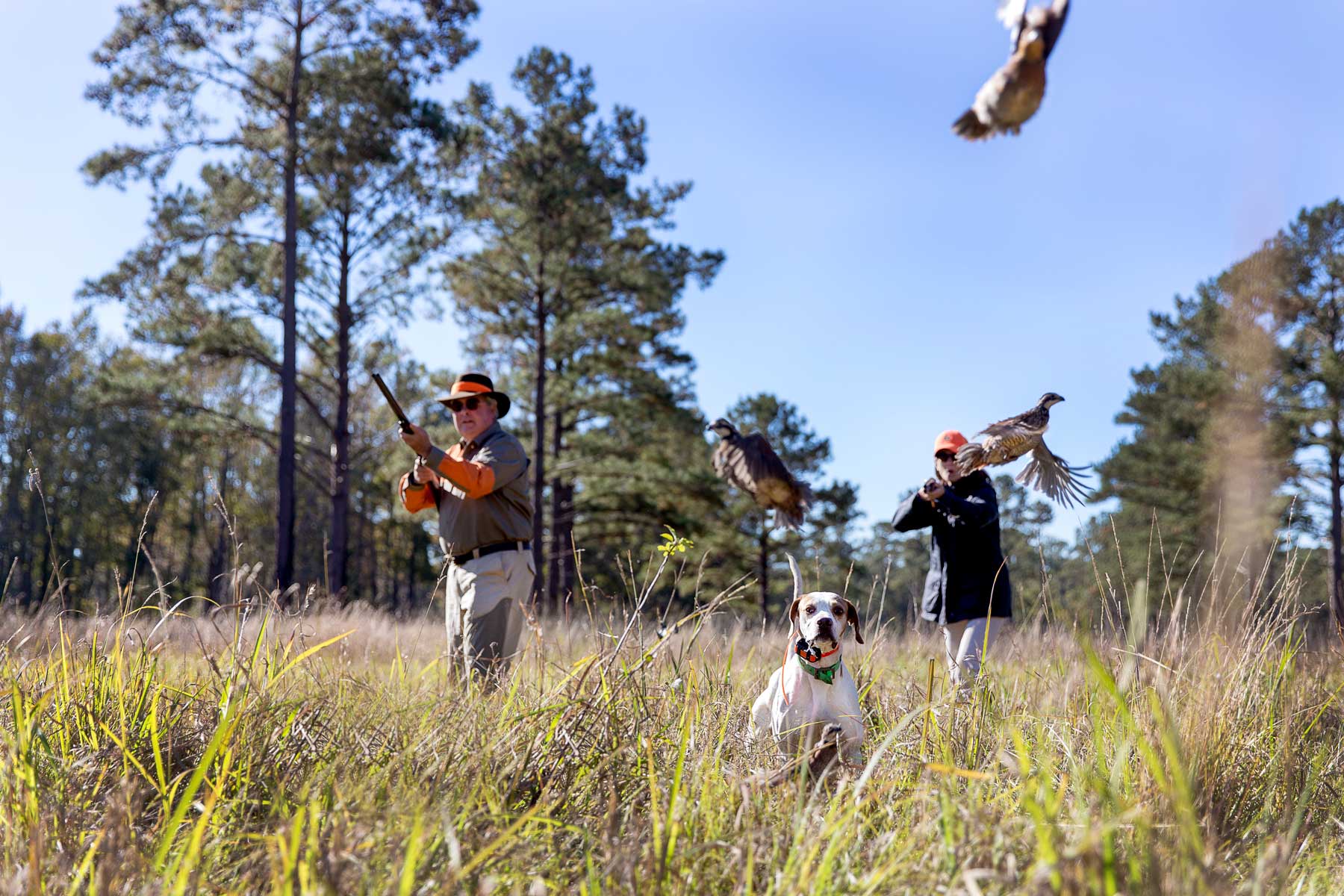
Brays Island Plantation
Sheldon, SC
Quail
5,500 acres. Premier quail and partridge in the Southeast. 3,500 of the 5,500 acres set aside as nature preserves.
Verified May 2026Visit website →
From the Lowcountry's plantation tradition to the Piedmont, South Carolina's licensed upland hunting preserves offer quail, pheasant, and chukar hunting over pointing dogs. Whether you want a guided hunt or a self-guided day in the field, here is where to go.
Be the first preserve hunters see when they search for quail and pheasant hunting in South Carolina. The presenting slot puts your preserve front and center on this page.
Claim this spot5 preserves across South Carolina, each verified against a working website or current public listing.
5,500 acres. Premier quail and partridge in the Southeast. 3,500 of the 5,500 acres set aside as nature preserves.
Lowcountry quail just outside Charleston. Pines, cypress, open fields.
Long-running Pee Dee operation specializing in bobwhite quail over pointers and Brittanys.
Quail, pheasant, and chukar packages with your dogs or theirs.
Piedmont region preserve bounded by the Enoree, Saluda, and Lake Greenwood.
Get your preserve listed and seen by hunters searching for their next hunt.
List your preserveSouth Carolina's quail tradition runs deeper than almost anywhere in the country. The corridor between Aiken, Camden, and the ACE Basin has been managed for bobwhite hunting since the era when Northern industrialists bought up worn-out cotton land and turned it into winter shooting country. Much of that ground is still burned, thinned, and managed for birds today, and the preserves that operate there inherited both the habitat practices and the culture: pointing dogs, unhurried mornings, and quail hunted the old way.
The Lowcountry's pine savanna and broomsedge fields are what make it work. Regular prescribed fire keeps the understory open, which is precisely the structure bobwhite need to move, feed, and escape. Upstate toward the Piedmont, the cover shifts to mixed hardwood and pasture edge, and preserves there tend to run a broader mix of pheasant and chukar alongside quail.
The state's preserves lean strongly toward quail, and several offer the full plantation experience: mule-drawn wagons, kennels of pointers and setters, and lodging that expects you to stay for the weekend rather than the morning. That is the South Carolina style, and it is worth planning a trip around.
Licensed shooting preserves in South Carolina generally operate on an extended season that runs well beyond the wild-bird season, which is part of what makes preserve hunting so flexible. Exact dates, bag limits, and licensing requirements change from year to year and can differ by preserve.
Before you book, confirm current rules with the official state agency, the South Carolina Department of Natural Resources, and check directly with the preserve. Most preserves can sell or arrange any short-term license you need on site.
South Carolina upland preserves most commonly offer bobwhite quail, ring-necked pheasant, and chukar partridge. Many run released-bird hunts and provide guides, trained dogs, and lodging.
Licensing rules vary. Always confirm current requirements with the South Carolina Department of Natural Resources and with the individual preserve before booking.
Licensed shooting preserves typically operate on an extended season that runs longer than the wild-bird season. Dates change annually, so verify with the preserve and the state wildlife agency.
Yes. Many preserves welcome beginners and families, offering guided hunts, trained dogs, instruction, and equipment so newcomers can have a safe, successful first outing.